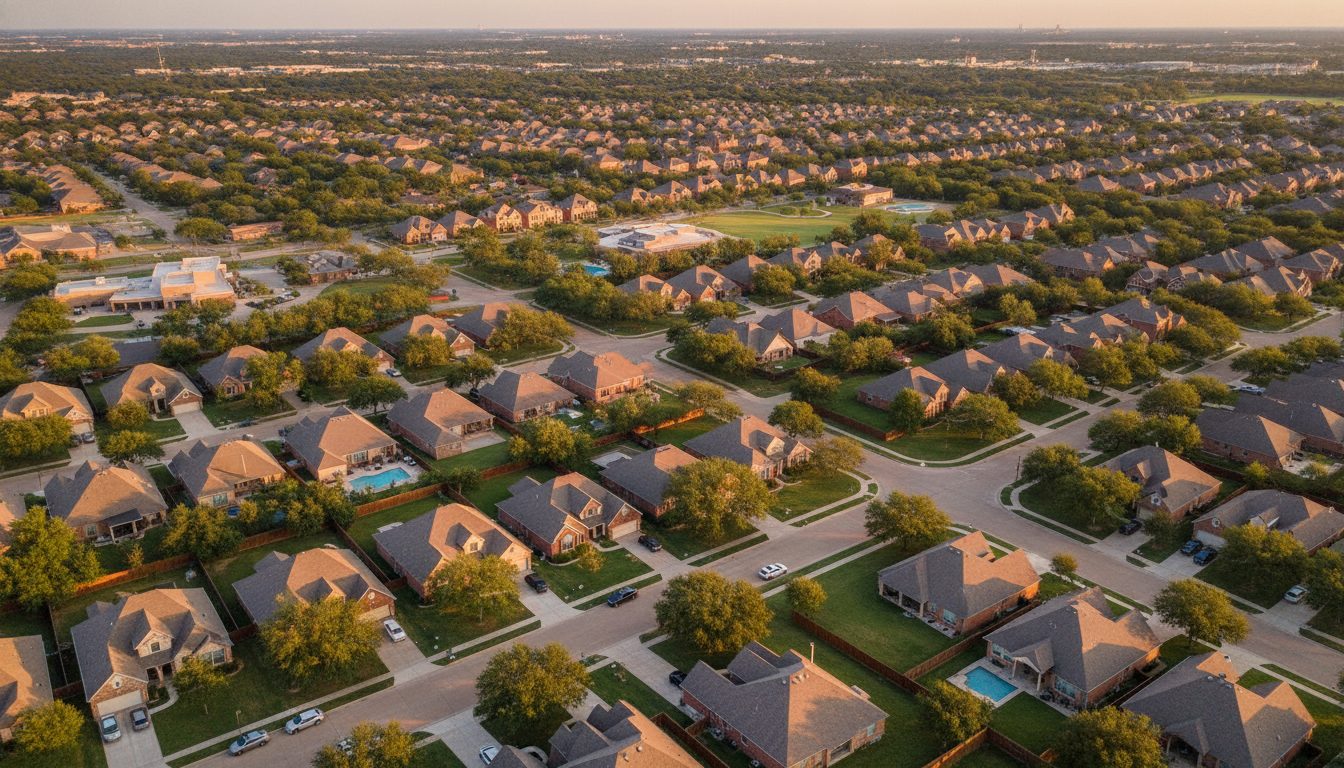
Short answer: To find comparable home values in Fort Bend County for your 2026 property tax protest, start with the FBCAD website's property search tool to identify recently sold homes similar to yours. Focus on properties within your neighborhood, built around the same time, with similar square footage and features. You can also leverage real estate agent insights or specialized tools to uncover undervalued comparables.
- Start with the FBCAD website for initial research.
- Look for homes similar to yours in size, age, and location.
- Focus on recent sales and properties assessed for less.
- Consider both sales-based and equity-based comparables.
- Always verify key dates with the Fort Bend CAD.
- Specialized tools can quickly identify your 'gap'.
Why Do Comparable Home Values Matter for Your Tax Protest?
When you protest your property taxes in Fort Bend County, you’re essentially telling the Fort Bend Central Appraisal District (FBCAD) that their assessed value for your home is too high. One of the strongest arguments you can make is that your home is valued unequally compared to similar properties. This is known as an ‘equal and uniform’ protest, a right granted under Texas Tax Code 41.43(b)(3). To win this protest, you need to show evidence of comparable homes that are either:
- Sold for less than your assessed value (sales comparables).
- Assessed for less than your home, despite being similar (equity comparables).
Finding these comparable properties, often called ‘comps,’ is the foundation of a successful protest. It’s about demonstrating the ‘gap’ between what your home is assessed at and what it’s truly worth, or how it stacks up against your neighbors.
Where to Start Your Search: The FBCAD Website
The Fort Bend Central Appraisal District (FBCAD) website is your primary resource for finding property data. Here’s how to navigate it:
- Visit the FBCAD Website: Go to the official FBCAD website (fbcad.org) and look for their ‘Property Search’ or ‘Real Property Search’ tool.
- Search for Your Property: Enter your address, owner name, or property ID to pull up your home’s details. Note your current assessed value and characteristics (square footage, year built, lot size, number of bedrooms/bathrooms, etc.).
- Expand Your Search: Use the search tool to look for properties in your immediate neighborhood (e.g., within a quarter to half-mile radius). Filter by criteria similar to your home:
- Property Type: Single-family residential.
- Year Built: Within a few years of your home.
- Square Footage: Within 10-20% of your home’s living area.
- Lot Size: Similar lot dimensions.
- Number of Beds/Baths: Comparable configurations.
Look for recent sales (ideally within the last 12-18 months, leading up to January 1 of the current tax year, which is January 1, 2026, for the 2026 tax year). Also, identify properties with lower assessed values that closely match your home’s characteristics.
What Makes a Good Comparable Property?
Not all similar homes make strong comparables. Here’s what to prioritize when selecting your comps:
- Proximity: The closer, the better. Homes on the same street or in the same subdivision are ideal.
- Similarity: Focus on homes that are truly like yours. Minor differences are okay, but significant variations (e.g., a completely renovated home vs. an original build, or a much larger lot) can weaken your case.
- Date of Sale/Assessment: For sales comps, look for sales data as close to January 1, 2026, as possible. For equity comps, use the current (2026) assessed values.
- Condition and Features: While hard to verify perfectly from public records, consider general condition. A home with an extra garage, pool, or significant upgrades might not be a fair comparison unless yours has similar features.
Aim for 3-5 strong comparables. Having too many weak comparables is less effective than a few solid ones.
Beyond the FBCAD Website: Other Resources for Comps
While FBCAD is a great starting point, other resources can help you build an even stronger case:
- Real Estate Agents: Local real estate agents have access to Multiple Listing Service (MLS) data, which often provides more detailed information on sales, property features, and market trends. They can generate a Comparative Market Analysis (CMA) report for you.
- Online Real Estate Portals: Websites like Zillow, Redfin, and Realtor.com can provide recent sales data and estimated values, but always cross-reference this with official FBCAD data, as their algorithms can sometimes be inaccurate.
- Professional Tax Protest Services: Companies specializing in property tax protests have access to proprietary databases and analytical tools that can quickly identify the strongest comparables and develop a robust argument for you. If digging through data feels daunting, or you want a quick check, Tax Gaps TX offers a free home check at app.taxgapstx.com/check. In about a minute, you can see your estimated over-assessment gap for Fort Bend County, based on public appraisal data and comparable homes assessed for less than yours. A specialist can then walk you through the evidence and whether it’s worth protesting.
Key Dates and Deadlines for Fort Bend County Homeowners
Deadlines are crucial in the property tax protest process. For the 2026 tax year in Fort Bend County, the standard deadline to file your protest is May 15, 2026, or 30 days after FBCAD mails your Notice of Appraised Value, whichever is later. It’s always best to file as early as possible.
Remember that exemption amounts and specific deadlines can change year-to-year. Always confirm the most current information directly with the Fort Bend Central Appraisal District (FBCAD) or the Texas Comptroller’s office to ensure you don’t miss any critical dates.
DIY vs. Professional Help for Your Fort Bend Property Tax Protest
Aspect Doing It Yourself Using a Professional Service Time Commitment Significant research required (hours to days) to find, analyze, and organize data. Minimal time required from you; the service handles the heavy lifting. Data Access Primarily FBCAD public records, online real estate sites (can be limited or outdated). Access to proprietary databases, MLS data, and expert analysis for stronger comps. Expertise Requires understanding tax code, valuation methods, and protest procedures. Leverages specialists with deep knowledge of local market and appraisal district tactics. Evidence Quality Good if you're thorough, but may miss key details or stronger comparables. Professionally compiled, persuasive evidence tailored to your specific case. Cost Free (your time is the cost). Typically a percentage of tax savings, no upfront fee (check specific terms). Related guides- ↑Complete guide: Using County Appraisal Data to Lower Your Property Taxes
- ›Understanding Your Travis County Property Appraisal: Key Factors That Influence Your Home's Value
- ›How Texas Appraisal Districts Calculate Your Home's Value
- ›How to Access TCAD Appraisal Data for Your Travis County Property Tax Protest
Check your home in minutes
Tax Gaps TX has a free home check at app.taxgapstx.com/check — enter your address and, in about a minute, see your estimated over-assessment gap for Travis (TCAD), Dallas (DCAD), or Fort Bend (FBCAD) county, based on public appraisal data and comparable homes assessed for less than yours. A specialist can then walk you through the evidence and whether it's worth protesting.
Frequently asked questions
What is the 'equal and uniform' protest in Texas?
An 'equal and uniform' protest argues that your property's appraised value is higher than the appraised value of comparable properties, violating the principle that all property should be appraised equally and uniformly. This is a powerful argument under Texas Tax Code 41.43(b)(3).
Can I use homes in different Fort Bend cities (e.g., Sugar Land vs. Katy) as comparables?
It's best to use comparables from your immediate neighborhood first. If truly similar properties are scarce, you might expand to very nearby, similar subdivisions in adjacent cities like Sugar Land, Katy, or Richmond, but the further away you go, the weaker your argument becomes. FBCAD prefers comps within the same market area and school district.
How far back can I look for comparable sales data?
For the 2026 tax year, you should primarily look for sales that occurred in 2025, especially closer to January 1, 2026. Data from late 2024 might also be relevant if recent sales are scarce, but sales older than 18 months become less persuasive as market conditions change.
What if I can't find good comparables in Fort Bend County?
If finding strong comparables feels difficult, consider using an 'equity' argument (comparing your assessed value to other similar homes' assessed values, not just sales prices). A property tax professional can also help you dig deeper into FBCAD's data or identify nuances that might not be obvious to the average homeowner, strengthening your protest.
Tax Gaps TX provides general information, not legal, tax, or financial advice. Deadlines and exemption amounts change; confirm current figures with your county appraisal district or the Texas Comptroller.